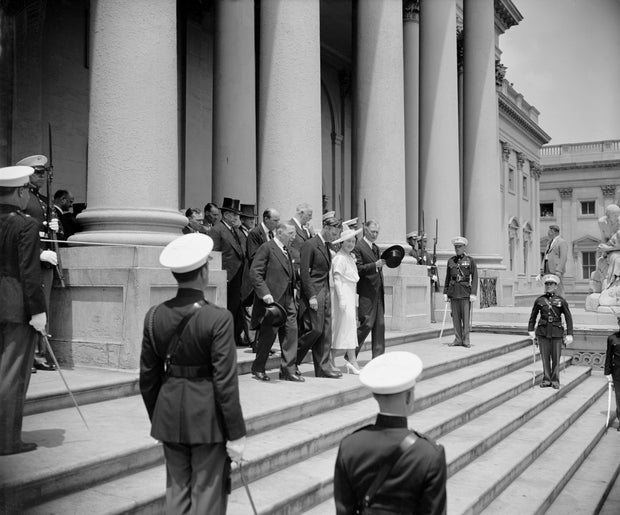
Photographs have a way of freezing time—not just moments, but moods, alliances, and shifting cultural tides. When British royals step onto American soil, the camera doesn’t just capture pageantry; it documents a delicate dance between two nations bound by language, history, and occasional tension. As King Charles III embarks on his state visit to the United States, the spotlight turns once again to the visual record of royal engagements across decades—images that reveal more than just smiles and handshakes.
These photos aren’t mere souvenirs. They’re diplomatic tools, public relations milestones, and cultural barometers. From the first tentative royal tour after centuries of separation to modern-day efforts to reframe monarchy in a democratic age, each visit has been meticulously staged—and preserved—for history.
The Weight Behind the Frame: Why Royal Visit Photos Matter
A photograph of a British monarch in the U.S. does more than show a location or event. It signals intent. Is this a gesture of alliance? A bid for soft power? Or simply a celebration of shared heritage?
Consider Queen Elizabeth II’s 1957 visit to the United Nations. The image of her addressing the General Assembly, poised and resolute, wasn’t just a record—it was a statement. Post-war Britain was no longer an empire, but the Queen remained a global figurehead. That photo, widely circulated in both nations, reinforced Britain’s continued relevance on the world stage.
Similarly, when Prince William and Kate Middleton strolled through Central Park in 2011, the candid shots of them laughing amid crowds projected accessibility—countering criticism that the monarchy had grown too distant. The optics were deliberate: modern, relatable, and in sync with American values.
Photos also capture unscripted moments that define legacies. The sight of Queen Elizabeth II sipping a Coke at the Atlanta Olympics in 1996 became an instant classic—not because it was grand, but because it was human. These snapshots humanize institutions often seen as untouchable.
A King’s Arrival: What Charles III’s Visit Reveals
King Charles III’s state visit arrives at a complex moment. The U.S. is deeply polarized; the British monarchy faces scrutiny over its relevance, finances, and colonial legacy. Yet Charles steps in with a different playbook—one shaped by decades of public service, environmental advocacy, and a keen eye for symbolism.
Photographs from his early appearances in Washington, D.C.—laying a wreath at the Tomb of the Unknown Soldier, meeting with President Biden at the White House, speaking at climate forums—will be parsed for nuance. Will he wear a military uniform, despite stepping back from active royal duties? Will Camilla, now Queen, be presented with full ceremonial recognition?
Each image will carry layers: respect for tradition, acknowledgment of change, and an effort to align the monarchy with urgent global issues like sustainability and youth engagement. Unlike past visits focused on Cold War alliances or royal spectacle, Charles’s trip leans into substance—meant to resonate in an era where influence is earned, not assumed.
One telling moment may come during a visit to a community project or cultural institution—say, a Native American reservation or a clean energy startup. If photographed engaging directly with locals, not just dignitaries, it signals a shift from imperial symbolism to inclusive partnership.
First Steps: The 1939 Royal Visit That Changed Everything Before Elizabeth, before Charles, there was King George VI—and a 1939 visit so pivotal it reshaped Anglo-American relations.
:max_bytes(150000):strip_icc():focal(728x275:730x277)/princess-catherine-prince-william-donald-trump-king-charles-iii-trump-state-visit-uk-windsor-091725-8672599a27214b6f8ffdbb07fd7596e4.jpg)
At the time, Europe teetered on the brink of war. The U.S. remained officially neutral. But when King George VI and Queen Elizabeth (the future Queen Mother) landed in Quebec and journeyed south, they weren’t just touring—they were lobbying. Their destination: the World’s Fair in New York and a historic dinner at Franklin D. Roosevelt’s estate in Hyde Park.
Photographs from that trip were carefully curated. One iconic image shows the King and FDR walking arm-in-arm through the Rose Garden, relaxed and familiar. Another captures the royal couple at a family-style barbecue—George VI eating a hot dog. The press dubbed it the “hot dog summit,” and the photo of him holding the bun, slightly awkward but game, endeared him to Americans.
This was the first time a reigning British monarch had set foot in the U.S. The optics mattered: a vulnerable empire reaching out to a rising power. The visit helped lay the groundwork for the wartime alliance that followed. Without it, Churchill’s later appeals to Roosevelt might have fallen on colder ears.
Elizabeth II: A Lifetime of American Encounters
No monarch has visited the U.S. as often or as symbolically as Queen Elizabeth II. Her six official trips spanned five decades, each photographed with an eye toward continuity and connection.
Her first state visit in 1957 was steeped in Cold War context. Arriving by train in Washington, she addressed Congress—only the third woman ever to do so. The image of her in a pink dress, speaking calmly to a joint session, became iconic. She praised the “special relationship,” a phrase Churchill had coined, now cemented in diplomatic rhetoric.
Later visits reflected changing times. In 1976, during the U.S. bicentennial, she toured Colonial Williamsburg and Boston, even wearing a replica 18th-century riding habit. Photos from that trip balanced reverence for history with a touch of irony—an heir to the throne once seen as a tyrant now celebrating independence.
By 2007, her final state visit, the tone was more nostalgic. She returned to Jamestown, site of the first permanent English settlement, and laid a wreath for the 400th anniversary. The images were solemn, almost reflective—a monarch acknowledging a past both shared and fraught.
Through it all, Elizabeth remained a master of visual diplomacy. Whether riding side-saddle in a parade or laughing with schoolchildren in Chicago, her photos projected stability, grace, and a quiet command of symbolism.
Princes in the Public Eye: William, Harry, and the New Royal Narrative
If Elizabeth represented continuity, her grandsons William and Harry—now Duke of Cambridge and Duke of Sussex—embody adaptation. Their U.S. visits, heavily photographed and widely shared, speak to a monarchy trying to stay relevant in the digital age.
William and Kate’s 2011 tour came just months after their wedding. Photos of them at the Natural History Museum in Los Angeles, or dancing at a reception in Beverly Hills, blended celebrity with duty. But it was William’s 2021 Earthshot Prize launch in Boston that shifted the tone—serious, issue-driven, and visually centered on innovation and youth.
Harry’s presence in the U.S. is more complicated. Post-2020, his visits are no longer official royal engagements, but they’re no less photographed. His 2023 trip for the Invictus Games in Florida drew intense media scrutiny. Images of him with veterans, or speaking passionately about mental health, contrast with tabloid shots of family tension.
The visual contrast is stark: William in a suit at a climate forum, Harry in a bomber jacket with a megaphone. Both are using photos to build narratives—but different ones. One aligns with institutional duty, the other with personal advocacy.
Diplomacy in High Definition: How Photos Shape Perception

In the age of social media, a single image can define a visit more than a speech. The royal communications team knows this. Every outfit, handshake, and backdrop is chosen with photo potential in mind.
Take the 2014 visit of Prince George, then just 10 months old. No official duties, but his appearance on the balcony of Buckingham Palace during a U.S. flag-raising ceremony generated thousands of images. The sight of a future king waving (or crying) on camera was pure public relations gold—softening the monarchy’s image with innocence and continuity.
Cameras also expose missteps. When Prince Andrew gave a now-infamous BBC interview in 2019, photographed in a dimly lit study looking defensive, the visuals amplified the controversy. No royal event in the U.S. can afford such optics—especially now.
Modern visits are choreographed for shareability. Think of Kate Middleton crouching to speak to children at a school in Baltimore—the photo went viral for its warmth. Or Charles walking through a wildfire-scarred forest in California, face streaked with soot. These aren’t accidents. They’re visual strategies.
What the Cameras Will Capture This Time
As King Charles III tours American cities, expect images that blend tradition with transformation:
- White House arrival: The formal greeting on the South Lawn, with full military honors. Look for the salute, the inspection of the guard, and the first handshake with the President—each a photo-op rich in protocol.
- Congressional address: If he speaks before a joint session (as Elizabeth did), the image will echo history, but with updated messaging—likely on climate, youth, or global cooperation.
- Cultural moments: A visit to a jazz hall in New Orleans or a tech incubator in Austin could produce intimate, humanizing shots.
- Camilla’s role: How she’s framed—as consort, queen, or equal partner—will signal the monarchy’s evolving stance on女性 leadership.
- Security contrasts: The sight of armed guards beside historic monuments, or royal motorcades navigating city streets, reminds viewers of both privilege and vulnerability.
Every frame will be parsed—not just for beauty, but for meaning.
Closing the Circle: From Past Pageantry to Present Purpose
The photographs of British royal visits to the U.S. form a visual timeline of alliance, adaptation, and performance. From George VI’s hot dog to Charles III’s climate crusade, they show a monarchy learning to speak the language of the moment.
As new images emerge from Charles’s visit, they won’t just document a trip—they’ll contribute to a legacy. One that balances crown and country, history and progress, ceremony and sincerity.
For those watching, the lesson is clear: in diplomacy, what you say matters. But what the camera sees? That’s what lasts.
Frequently Asked Questions
Why are British royal visits to the U.S. so heavily photographed? Royal visits are major diplomatic events, and photos serve as tools of public diplomacy—shaping global perception of both the monarchy and U.S.-UK relations.
Did Queen Elizabeth II visit the U.S. often? Yes—she made six official visits between 1957 and 2007, more than any other British monarch.
What was the most iconic moment from a royal U.S. visit? King George VI eating a hot dog in 1939 remains one of the most humanizing and widely remembered images.
Will King Charles III address Congress like his mother did? It’s possible, though not confirmed. A speech to a joint session would be highly symbolic, linking past and present.
How do royal photos influence public opinion? They personalize distant institutions. A warm interaction or casual moment can boost approval and soften criticism.
Are Prince William and Harry still representing the monarchy in the U.S.? William participates in official engagements; Harry’s visits are private, though still high-profile.
What role does fashion play in royal visit photos? Outfits are chosen for cultural sensitivity and visibility—bright colors stand out in crowds, and local designers are often honored.
FAQ
What should you look for in Royal Moments: British Monarchs in America Through Photos? Focus on relevance, practical value, and how well the solution matches real user intent.
Is Royal Moments: British Monarchs in America Through Photos suitable for beginners? That depends on the workflow, but a clear step-by-step approach usually makes it easier to start.
How do you compare options around Royal Moments: British Monarchs in America Through Photos? Compare features, trust signals, limitations, pricing, and ease of implementation.
What mistakes should you avoid? Avoid generic choices, weak validation, and decisions based only on marketing claims.
What is the next best step? Shortlist the most relevant options, validate them quickly, and refine from real-world results.